Table of Contents
What Are ChatGPT Ads?
How the ChatGPT Ads Platform Works
Ad Formats Available in ChatGPT
How Targeting Works (And Why It's Different)
ChatGPT Ads Pricing: What It Actually Costs
Measurement, Tracking & Attribution
We Tested ChatGPT Ads: Here's What Actually Happened
Limitations Marketers Should Know Before Testing
Who Should Test ChatGPT Ads in 2026 (And Who Shouldn't)
How ChatGPT Ads Compare to Google Ads and Meta Ads
What ChatGPT Ads Mean for the Broader Search and Discovery Landscape
How Cleverly Complements Paid AI Channels With Outbound Lead Generation
Conclusion
Frequently Asked Questions
Modified On :
September 8, 2026
Key Takeaways
- ChatGPT ads launched to US Free and Go tier users on February 9, 2026, with self-serve Ads Manager access opening May 5, 2026.
- There's no minimum spend, making small test budgets genuinely viable.
- Targeting runs on conversation context, not keywords or interest audiences, and there's no PII-based targeting or retargeting available.
- CPC and CPM bidding are both available, with pricing still volatile as the auction matures.
- Our own test showed 57 clicks reported by OpenAI versus fewer than 20 visits in Google Analytics on the same UTM-tagged campaign, with zero conversions so far.
- Best fit for B2B SaaS, professional services, education, and high-consideration ecommerce; weak fit for impulse purchases and retargeting-dependent brands.
- Recommended approach: small budget, one hypothesis, a defined runway, and a hard decision point
For most of ChatGPT's life, it was ad-free. That changed in 2026. OpenAI turned on a live advertising channel inside ChatGPT, and for the first time in years, marketers have a genuinely new place to buy attention.
The scale is hard to ignore. ChatGPT has crossed 900 million weekly active users, and OpenAI's ad pilot reportedly hit $100 million in annualized revenue in under six weeks, from less than 20% of eligible users even seeing ads yet.
A growing share of that user base is doing product research inside ChatGPT before they ever open Google. That's a real shift in where buying decisions start.
Here's the tension we've been sitting with. It's early. The platform is incomplete. Nobody wants to burn budget testing a beta. But early channels also come with cheaper inventory and a lot less competition, and the marketers who figure out an early channel first usually keep that advantage for a while.
So we did what we tell our clients to do with any new channel. We tested it ourselves. We ran a live campaign in ChatGPT Ads Manager, tracked it properly, and found a number mismatch between OpenAI's own reporting and our Google Analytics data that made us pause the whole test. We'll walk through exactly what happened later in this guide, numbers included.
This guide covers how ads in ChatGPT actually work, the Ads Manager, targeting, formats, pricing, measurement, current limitations, who should test it, how it stacks up against Google and Meta, and our own real campaign data.
It's written for performance marketers, growth leads, agency owners, and B2B marketing teams trying to figure out whether ChatGPT belongs in the 2026 media mix.
One note before we go further. This is written as of late 2026, and this platform is moving fast. Treat the specifics here as a snapshot, not gospel. Some of this will be outdated within a quarter.
What Are ChatGPT Ads?
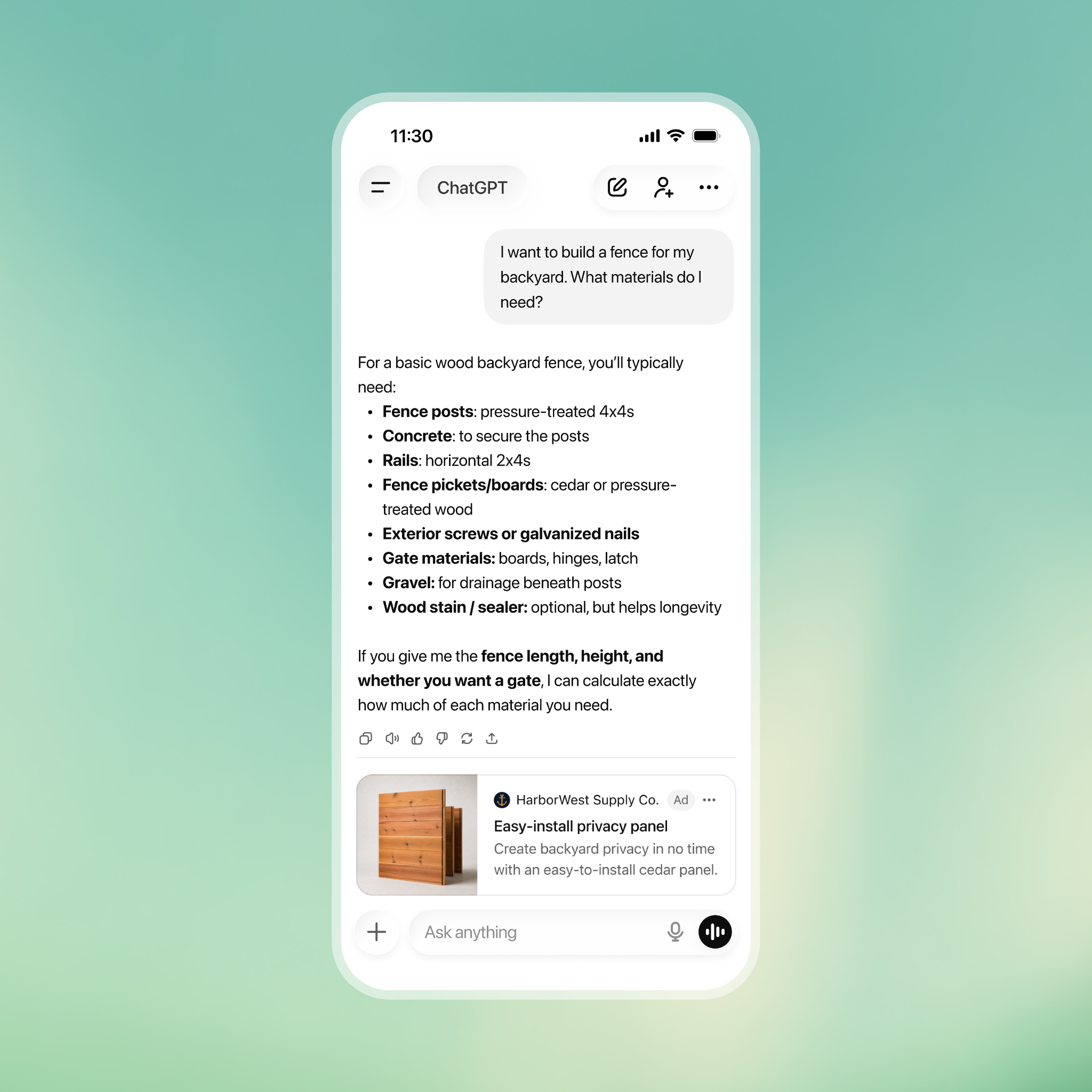
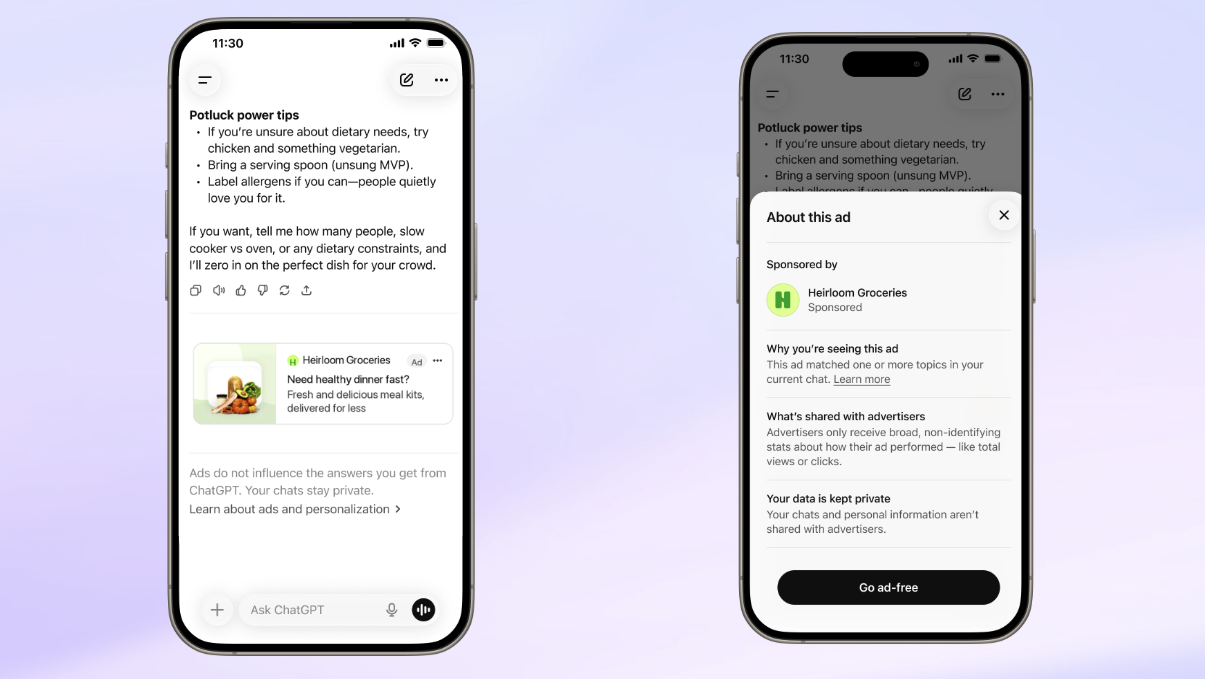
ChatGPT ads are sponsored placements that show up inside ChatGPT conversations, shown to logged-in adult users on the free and lower-priced tiers. They're not woven into the AI's actual answer. They appear in a clearly labeled, visually distinct box below the response, so there's no confusion about what's an ad and what's ChatGPT's own output.
OpenAI began showing ads in ChatGPT to US users on the Free and Go tiers starting February 9, 2026. The self-serve Ads Manager opened to all US businesses on May 5, 2026, removing what had been a steep minimum spend requirement during the earlier pilot phase.
Let's be clear about what these ads are not.
They're not paid influence over what ChatGPT actually tells a user. OpenAI isn't selling better answers. They're not keyword-bid search ads like Google. And they're not display banners either. There's no rich media, no video, no interstitial popping up mid-conversation.
Why did OpenAI build this? Simple. ChatGPT has a massive free user base and running a model at that scale is not cheap. Advertising is a straightforward way to monetize the free tier without pushing everyone toward a paid subscription. Expect the ad format to expand as that monetization pressure continues.
The mental model to hold onto for the rest of this guide: this is contextual advertising against conversational intent. It behaves differently from both search and social, and treating it like either one will lead you to the wrong playbook.
🚀 Turn Attention Into Leads
Cleverly helps B2B brands generate 224.7K+ leads through targeted LinkedIn outreach and cold email campaigns.
How the ChatGPT Ads Platform Works
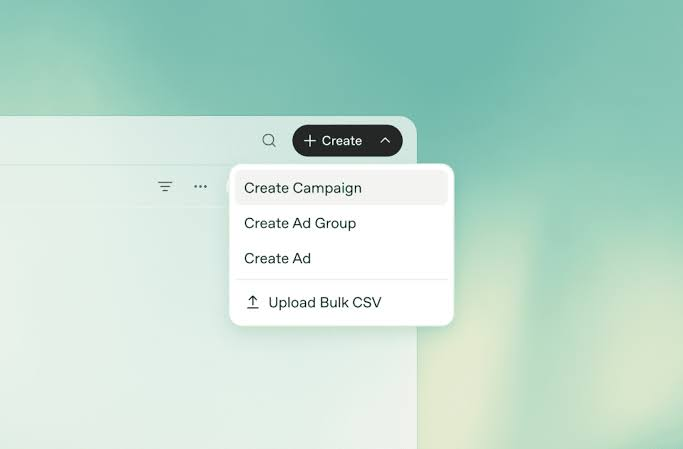
The ChatGPT ads platform runs through OpenAI's Ads Manager, a self-serve dashboard at ads.openai.com. It's where advertisers build campaigns, set budgets and bids, upload creative, and pull reporting. If you've run campaigns in Google Ads or Meta Ads Manager, the shape of it will feel familiar.
Every campaign goes through an approval flow before it starts serving. Build in some buffer time for review when you're planning a launch date. It's not instant.
The account structure maps reasonably well to what you already know from Google Ads and Meta: accounts, campaigns, ad sets or groups, individual ad units, and a reporting layer sitting on top.
The best part for anyone testing on a small budget: there's no minimum spend requirement. That wasn't always true. The original pilot required a much larger commitment and ran mostly through agency partners. Self-serve access changed that, and now a small test budget is genuinely viable.
A few access notes worth flagging. Availability started as a US-only rollout and has been expanding market by market since, adding countries like the UK, Canada, Australia, and New Zealand. Ads only show to logged-in adult users on specific subscription tiers. Paid tiers like Plus, Pro, Team, and Enterprise don't see ads at all.
And one honest caveat: this is still a beta product. Features ship frequently. The interface changes. What we describe here may look different by the time you read it.
Ad Formats Available in ChatGPT
Right now there are two main formats inside the ChatGPT ads platform.
The core placement is the in-conversation ad: a labeled sponsored unit that appears below the assistant's response, matched to what the conversation is actually about.
The second is a product feed format, built for retail and ecommerce advertisers. You upload a full product catalog, and ChatGPT automatically generates individual ads per item rather than making you build creative one at a time.
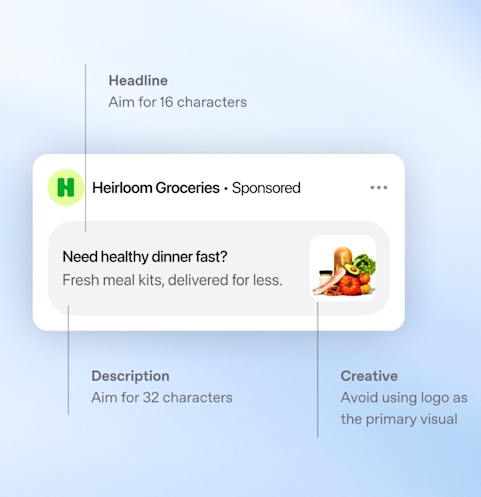
Creative requirements are tight. There's very little room for a headline, a line of copy, and a call to action. That constraint changes how you write. Clarity beats cleverness here. A clever line that needs context to land will just get skipped in a format this small.
What's missing matters just as much as what's there. No video. No rich display units. No interstitials that take over the screen. This is a text-first, low-friction format.
That subtlety cuts both ways. Because these ads are quiet and clearly labeled, they're less intrusive and tend to be better received than a banner ad shoved into a feed. But that same quietness makes them easy to scroll past if the copy doesn't earn a second look.
Picture it like this: you ask ChatGPT for help comparing project management tools, and below its answer sits a small, clearly marked box from a vendor with a one-line pitch and a link. That's the whole format. No animation, no popup, just a relevant offer sitting next to a relevant answer.
📈 Build Your Outbound Engine
Join 10,000+ businesses using Cleverly to generate predictable pipeline across LinkedIn, cold email, and cold calling.
How Targeting Works (And Why It's Different)
This is where how to run ads on ChatGPT starts to look genuinely different from anything else in your media mix.
Targeting is based on conversational context: the topic of the current chat, the user's broader chat history, and how they've interacted with ads before. That's it. There's no keyword bidding like Google. There are no interest categories or lookalike audiences like Meta. There's no cookie-based retargeting following someone around the web.
The privacy posture is deliberate. There's no PII-based targeting. That's both a constraint and, longer term, a durability advantage, since third-party tracking keeps eroding across the rest of the internet anyway.
Here's why that matters for high-consideration purchases specifically.
People type out their actual problem to ChatGPT in detail, often before they know what to even search for. Someone might describe a messy internal process to ChatGPT before they know the category of software that solves it. That surfaces buying intent earlier in the journey than a Google search ever could, because a Google search requires the user to already know the right keyword.
But the gaps are real, especially for B2B teams. Targeting controls for demographics are limited. There's no account-based targeting list you can upload. There's no retargeting at all. If your paid strategy leans hard on remarketing to warm visitors, that muscle doesn't exist here yet.
The practical takeaway: targeting precision on this platform comes from how relevant your offer is to a given conversation topic, not from how good you are at building an audience. That's a different skill than most performance marketers have spent years developing.
ChatGPT Ads Pricing: What It Actually Costs
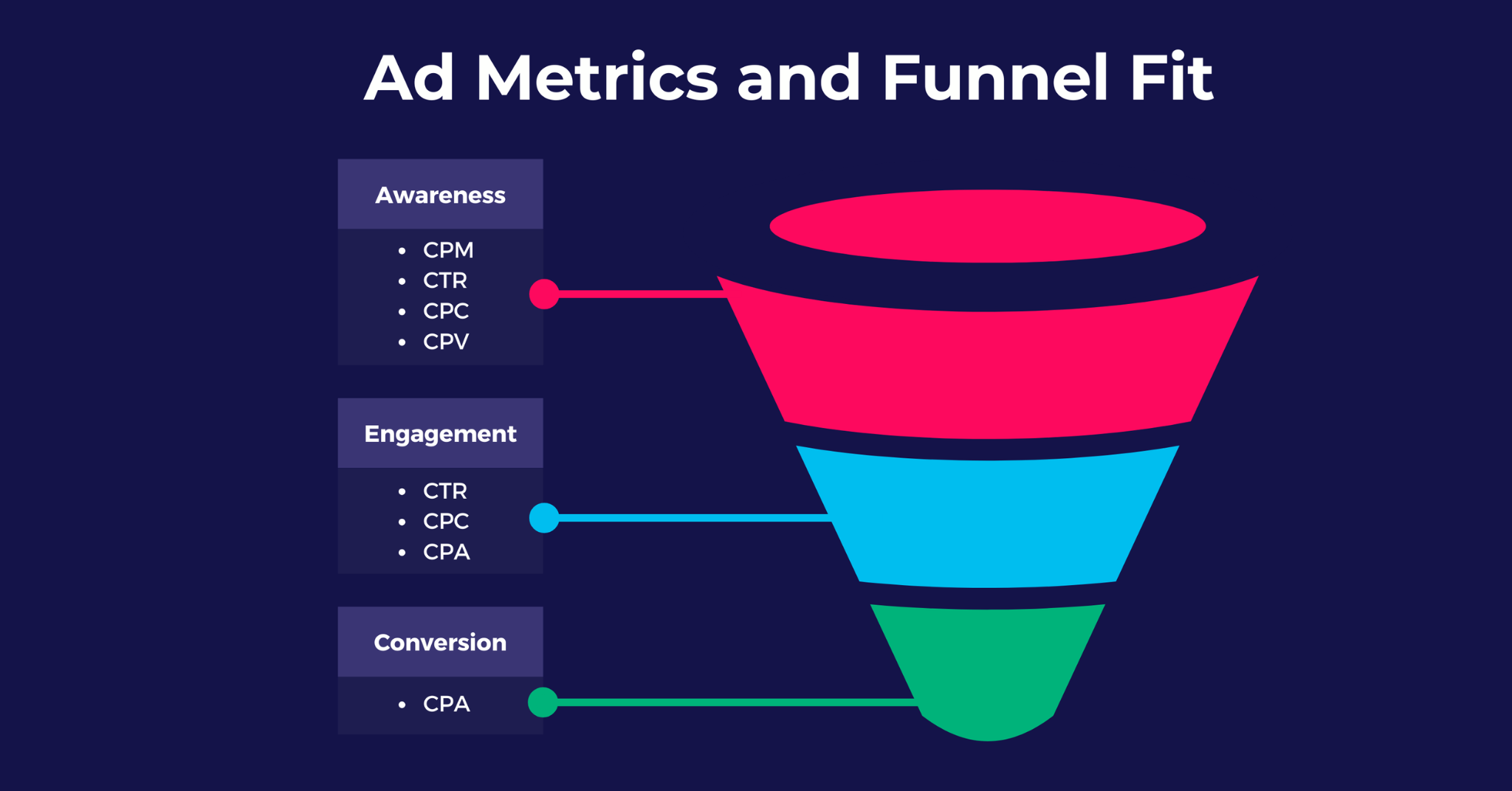
Two bidding models are available: CPC and CPM. CPC makes sense if you're optimizing for clicks and have a clear landing page conversion path. CPM makes more sense for awareness plays where impressions matter more than immediate action.
Auction dynamics are still settling. Default maximum bids and actual clearing prices have compressed in several categories as more inventory has come online and competition has started to build.
There's no minimum spend, so a realistic first test budget can be small. Think in the low thousands, not tens of thousands, especially while you're validating whether the channel even fits your funnel.
Compared to Google Search and Meta, early positioning has generally been cheaper. That's typical of any early-stage ad auction. Inventory is available, competition hasn't caught up yet, and prices haven't normalized.
The way to think about budget right now: treat it as a learning spend against a defined hypothesis, not a scaled acquisition channel. You're paying to learn how this auction behaves for your category, not to hit a target CPA yet.
Measurement, Tracking & Attribution
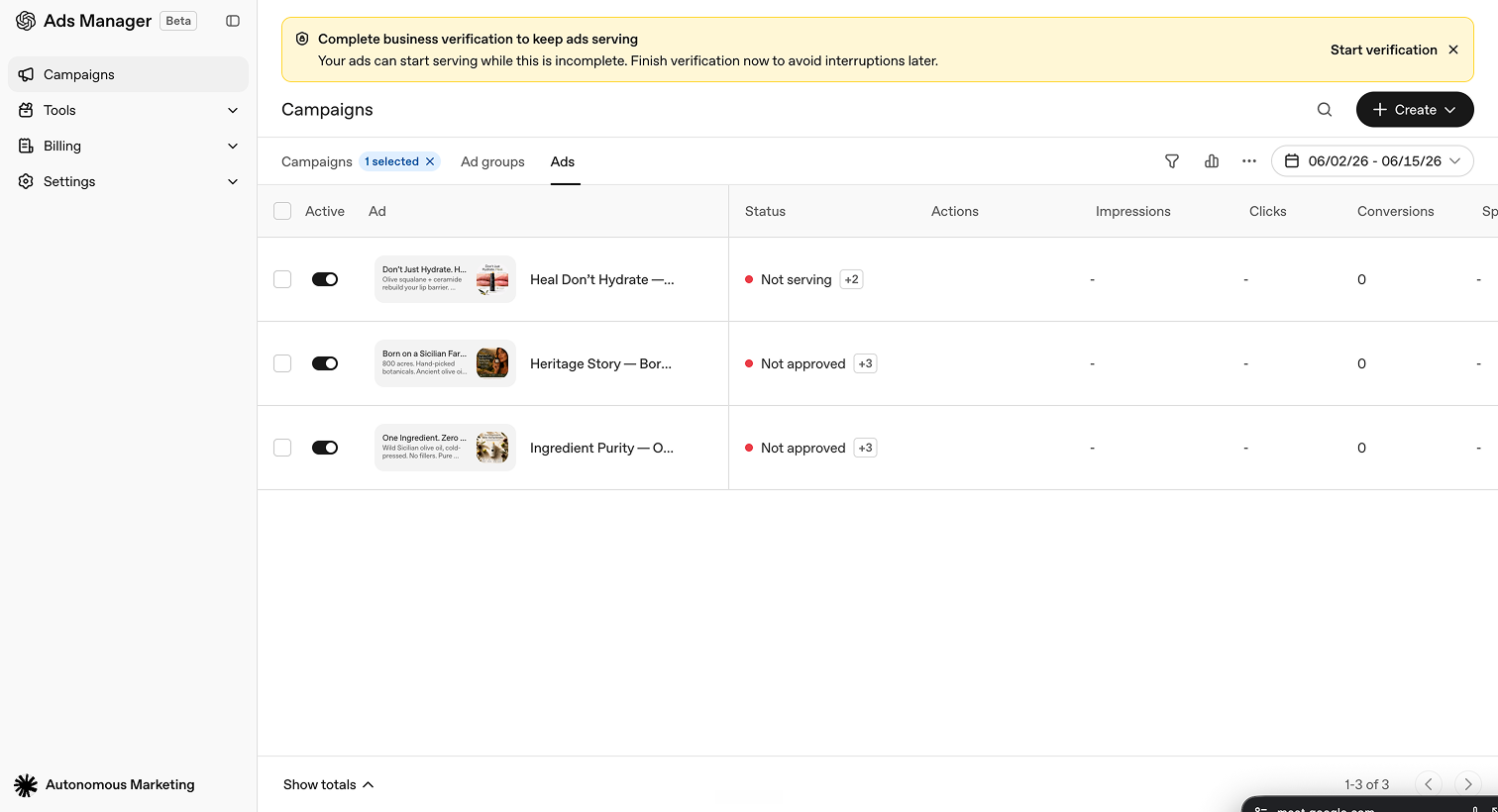
Ads Manager natively reports impressions, clicks, spend, CTR, average CPC, average CPM, and conversions. That's a reasonable starting dashboard.
Conversion tracking covers purchases, sign-ups, leads, and other post-click actions, assuming you've set it up correctly. OpenAI has rolled out both a browser-side pixel and a server-side Conversions API to support this.
The practical setup you actually need: strict UTM discipline on every single link, server-side capture where possible, and a Conversions API connection so ad exposure ties back to your CRM pipeline instead of stopping at a click.
Even with all of that in place, attribution has real gaps. Assisted and view-through influence is hard to isolate. A visitor sourced from a ChatGPT conversation might convert days later through an entirely different channel, and stitching that together isn't automatic.
Our recommendation, especially for B2B with longer sales cycles: measure at the pipeline level, not the click level. Clicks and CTR are useful directional signals, but they won't tell you whether this channel is actually generating revenue.
That said, there's a reporting gap here that mature platforms don't have, and we ran straight into it.
We Tested ChatGPT Ads: Here's What Actually Happened
We don't like writing guides based purely on other people's guesses, so we ran a real campaign through ChatGPT Ads Manager. Here's exactly what we found.
We set everything up the way we'd set up any test on Google or Meta. We added UTM parameters to every single link in the campaign, specifically so we'd be able to catch any mismatch between what OpenAI reported and what actually happened on our site.
Good thing we did, because we found one.
OpenAI's dashboard reported 57 clicks. Google Analytics reported fewer than 20 visits from that same campaign, using the same UTM-tagged links.
That's not a small rounding difference. That's a gap large enough to make us stop and ask a hard question: is the platform's own measurement unreliable, or is it double-counting clicks from the same user? Honestly, we don't know yet. And that uncertainty is the whole problem. If we can't trust the number the platform hands us, we can't confidently size a bigger test on top of it.
A few more numbers worth sharing. CTR was decent, but it came in lower than what we typically see running the same kind of offer on Google and Meta. And so far, this campaign has produced zero conversions.
Here's why we didn't just kill the test and walk away. OpenAI has the search intent and the raw volume to become a genuinely massive ad channel over the long run. We'd expect both the platform and its measurement tooling to improve meaningfully over the next six months, the same way every new ad platform's tooling matures once real advertiser dollars start flowing through it.
So our call was to pause, not quit. We're keeping an eye on it, and we'll come back to test again once the reporting layer catches up to the reporting layers we already trust.
If you're testing this channel yourself, we'd genuinely recommend building in the same UTM discipline we used. It's the only way you'll catch a discrepancy like this before you scale spend on top of a number you can't verify.
Limitations Marketers Should Know Before Testing
Our own test surfaced one of these firsthand, but here's the full list of gaps worth knowing going in.
- Limited demographic and geographic targeting compared to Google and Meta.
- Few manual brand-safety controls, with limited ability to exclude specific conversation topics or contexts.
- No retargeting, no ABM list uploads, no lookalike modeling.
- Market-by-market availability, not a global rollout, which rules out running this at scale internationally right now.
- A small creative surface with limited room to differentiate your message.
- Beta-stage reporting, with real gaps in cohort, placement, and audience breakdowns.
- A measurement discrepancy risk, based on what we saw between OpenAI's own click reporting and our Google Analytics data.
- Platform volatility, since features, pricing, and policies are changing often enough that any playbook goes stale fast.
None of this means you should ignore the channel. It means you should size your first test appropriately and instrument your own tracking rather than trusting the platform's dashboard on its own.
Who Should Test ChatGPT Ads in 2026 (And Who Shouldn't)
Strong fit: B2B SaaS, professional services, education providers, and high-consideration ecommerce. These are categories where buyers genuinely research before deciding, which is exactly the behavior already happening inside ChatGPT conversations.
Weak fit: impulse-purchase consumer goods, hyper-local businesses, brands that need strict brand-safety controls, and anyone whose paid strategy depends heavily on retargeting to work.
An underlying test to run on yourself: does your buyer describe their problem in conversation before they know the solution category?
If the answer is yes, this channel has a real shot at working for you. If your buyer already knows exactly what to search for, you're probably better served by Google.
Our practical recommendation, based on our own experience: small budget, one clear hypothesis, a defined runway, and a decision point you actually stick to.
We built a decision point into our own test, and it's the reason we were able to pause cleanly instead of quietly bleeding spend into a channel we couldn't fully trust yet.
How ChatGPT Ads Compare to Google Ads and Meta Ads
The strategic point worth sitting with: ChatGPT ads catch buyers earlier than Google search does, because people describe symptoms to an assistant before they know the right keyword to type into a search bar. That's genuinely useful, and it's not something Google Ads can replicate with its current model.
This is additive, not a replacement. The realistic 2026 play is a small ChatGPT test running alongside your existing Google and Meta spend, not a reallocation of budget away from channels you already trust.
What ChatGPT Ads Mean for the Broader Search and Discovery Landscape
Zoom out for a second. As more research moves into AI assistants, the discovery layer marketers optimize for is fragmenting away from traditional search. Google isn't going anywhere, but it's no longer the only place buying decisions start.
That has a knock-on effect on organic strategy too. Getting cited and recommended inside AI-generated answers is becoming its own discipline, sitting alongside traditional SEO rather than replacing it.
An ad-supported ChatGPT also signals something bigger about where AI monetization is heading, and it's reasonable to expect other AI assistants to follow the same path once the model proves out.
The rising-cost trajectory is predictable. Early channels get cheap clicks, then normalize as competition arrives. That window won't stay open forever, which is exactly why testing now, even cautiously, has real value.
One caution worth stating plainly: renting attention on a platform you don't control is always a rented asset. Paid channels can change their rules, their pricing, and their availability overnight, and you have zero say in it. That's exactly why owned pipeline channels matter just as much, if not more, alongside anything paid.
How Cleverly Complements Paid AI Channels With Outbound Lead Generation
ChatGPT ads are a promising new demand channel. But as we just walked through, they're rented attention on a beta platform with real targeting and measurement gaps. That makes them a supplement to your pipeline strategy, not a pipeline strategy on their own.
Here's the gap for B2B teams specifically: no ABM lists, no retargeting, and no account-level control mean you can't reliably reach a specific set of target accounts through ChatGPT ads today. You're at the mercy of the auction and whatever conversation happens to be happening.
That's exactly the gap we built Cleverly to close.
We run outbound lead generation programs built on ICP-based targeting and list building, LinkedIn outreach, cold email, and cold calling, so your team can reach named accounts directly instead of waiting for them to surface in an ad auction.
Paid AI channels are good at creating awareness and inbound demand. Outbound gives you deterministic access to the accounts you actually want to close. Teams that run both together compound results faster than teams betting everything on one or the other.
While ChatGPT ads mature, and while platforms like it work out their measurement kinks the way we experienced firsthand, outbound gives marketers a source of predictable meeting volume they control end to end.
Testing new channels but still need a predictable pipeline? Book a strategy call with Cleverly.
Conclusion
ChatGPT ads are real, they're live, and they're worth a small structured test in 2026. They are not yet a channel to build your entire plan around.
The opportunity is genuine: early inventory pricing, real problem-stage intent, and a competitive learning advantage for whoever moves now. The risk is just as real: beta targeting gaps, thin brand-safety controls, and a platform that changes month to month, including the kind of click discrepancy we ran into ourselves.
Our practical closing recommendation is the same one we followed. Define a hypothesis. Cap the budget. Instrument your measurement properly, including your own analytics, not just the platform's dashboard. Set a clear go or no-go date and actually honor it.
The marketers who understand this channel now, discrepancies and all, will be the ones who know exactly how to scale it once the tooling catches up.
Frequently Asked Questions
Free Resource
How to Scale a Profitable Cold Call System
Get the complete guide — download it instantly now.
Free Ebook
Download the Free Guide
Enter your details to get instant access.
You're all set! 🎉
Your ebook is downloading now.
Click below if the download didn't start automatically.